
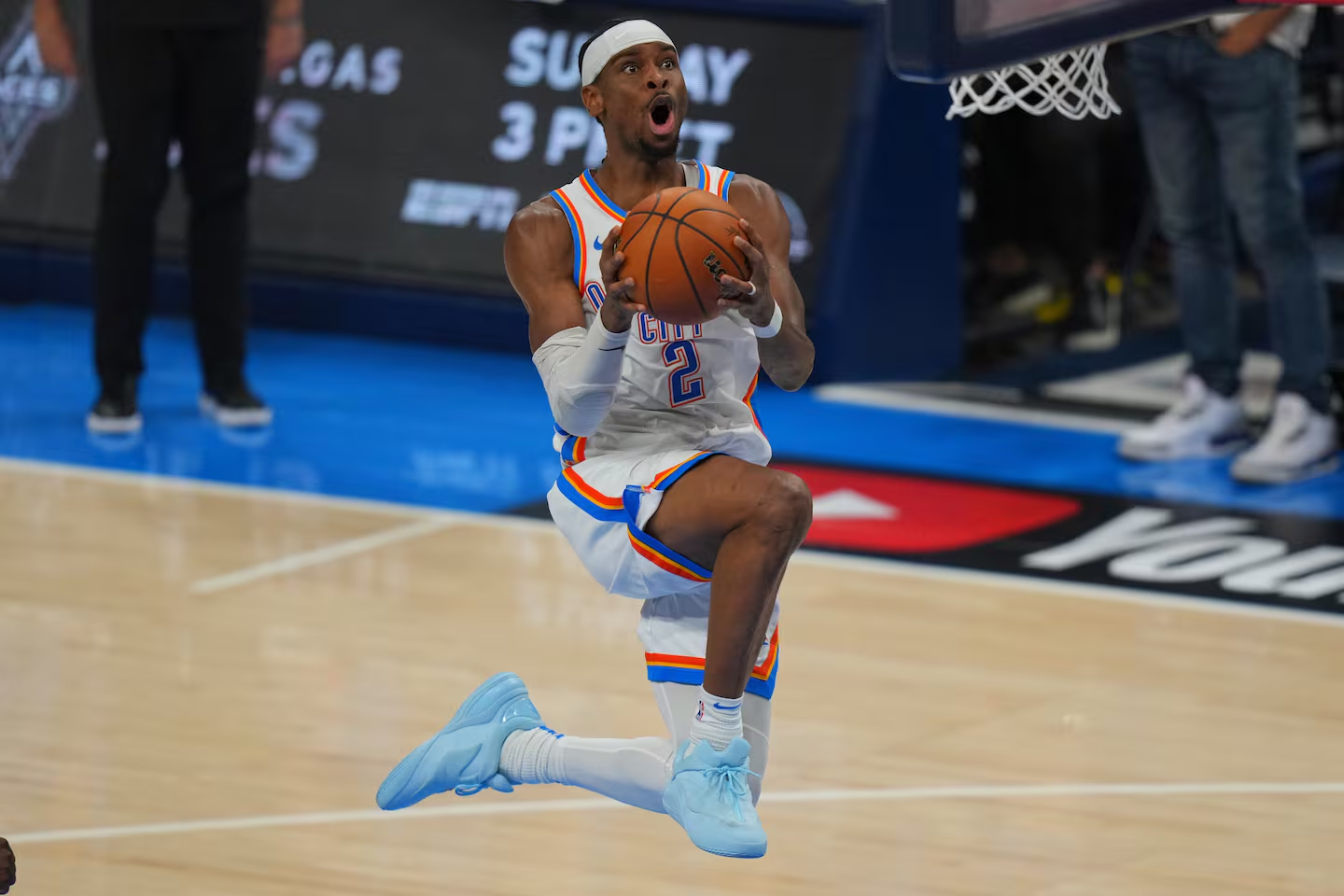
Basketball has always been a game of fundamentals, but the tools players use to develop those fundamentals are evolving faster than ever. Coaches, athletes, and trainers are no longer relying solely on repetition and court time. They increasingly turn to advanced equipment that sharpens shooting mechanics, boosts vertical power, and builds instincts around the glass. Whether you are a young athlete learning the basics or a competitive player trying to elevate your game, the right training equipment can turn hard work into measurable progress.
Improving skills in shooting, rebounding, and jumping requires more than athleticism. It requires technique, timing, strength, and consistency. This is where specialized equipment steps in. It creates controlled environments that simulate game situations, magnify weaknesses, and reinforce proper movement patterns. Instead of simply practicing for hours, players can now train with precision and purpose. As a result, equipment built for these areas has become an essential part of many basketball training drills used by athletes at every level.
Why Shooting Equipment Has Become Essential for Skill Development
In today’s game, shooting accuracy has never been more important. Players who can reliably score from multiple ranges change the entire rhythm of a game. Yet even talented shooters struggle with balance, hand placement, arc, and release timing. Shooting equipment aims to break down these components so players can refine their mechanics in a repeatable way.
Shooting aids such as form trainers help athletes build muscle memory by guiding the wrist and fingers into the correct position at release. Some devices restrict unnecessary movement, which forces the shooter to use their legs effectively instead of relying on upper body strength. When used consistently, these tools create smoother form, quicker release, and better accuracy.
Rebounders, often called return nets or shot return systems, also play a major role in shooting practice. These devices immediately send the ball back to the player after each shot, eliminating downtime and allowing high repetition without chasing the ball around the court. More repetition leads to more consistency. Players also stay locked into their rhythm, which is one of the most important aspects of becoming a reliable shooter.
Shooting arc trainers offer another layer of support. Many players struggle to achieve the optimal arc that allows the ball to enter the hoop cleanly. These tools create a visual cue that teaches players to shoot with the correct trajectory. With a softer arc, shooters improve their chance of scoring even when under pressure.
Building Dominant Rebounders with Specialized Equipment
Rebounding is often described as effort and desire, but behind every great rebounder is advanced timing and explosive power. Players must judge the ball’s trajectory, battle through contact, and elevate quickly. Specialized rebounding equipment helps athletes master these skills in a controlled setting.
One of the most effective tools is the rebounding rim attachment. These devices slightly narrow the rim, making it harder for the ball to drop through during shooting drills and increasing the likelihood of live rebound opportunities. This creates unpredictable bounces that challenge players to react quickly and adjust their positioning. Over time, athletes develop stronger instincts and improved footwork, both of which are crucial for controlling the boards.
Rebounding machines that simulate missed shots also play a key role. These machines pass or shoot balls at different angles, giving players the opportunity to practice securing rebounds from various directions. This unpredictability mirrors real game situations, where the ball rarely bounces in the same spot twice. Because the machine consistently delivers rapid sequences, athletes get far more repetitions than they would during a typical practice session.
Weighted basketballs provide another dimension of training. These help players develop stronger hands and forearms, which translates to better ball control in traffic. When athletes switch back to a standard ball after training with a weighted one, they often find that securing rebounds feels easier and more natural.
How Jump Training Equipment Transforms Athletic Performance
Jumping is at the heart of both shooting and rebounding. A higher vertical not only allows players to finish above defenders, it helps them contest shots, block attempts, and secure more rebounds. Jump training equipment focuses on explosive strength, power production, muscle activation, and landing mechanics.
Resistance bands and harness systems are among the most common tools. These attach to the player’s waist or legs and provide resistance as they jump. The added force requires athletes to engage their glutes, hamstrings, and core more effectively. Over time, this leads to increased power and improved vertical lift. Because the movements are basketball specific, the strength gains directly translate to real game actions.
Jump platforms and plyometric boxes remain timeless tools because they help athletes train both explosiveness and control. Players practice jumping onto and off the platform, improving their ability to generate force quickly and land safely. Proper landing technique lowers the risk of injury while allowing athletes to maintain balance during fast paced play.
One of the most innovative advancements is the use of wearable sensors. These devices track jump height, landing force, and lower body symmetry. When paired with proper equipment, they give athletes immediate feedback that helps them adjust their movements. This combination of tools and data enhances results much faster than traditional training alone.
How Equipment Creates Structure for Modern Training Sessions
Training equipment does more than isolate skills. It allows players and coaches to build structured sessions that integrate shooting, rebounding, and jumping into one fluid routine. This mirrors real game conditions, where athletes must combine skills seamlessly and react instantly.
For example, a player might run a shooting drill using a return net, then immediately move into a rebounding sequence using a rim trainer, followed by a short session on resistance based jump training. All of these exercises emphasize movement efficiency and quick transitions. This approach improves stamina, mental focus, and versatility, which are critical for modern basketball.
Because equipment creates consistent scenarios, it is also extremely effective for tracking progress. Coaches can measure accuracy, jump height, rebound timing, or speed of movement. This makes it easier to see which areas need more attention and adjust training sessions accordingly. Many athletes benefit from integrating structured basketball training drills alongside their equipment because it helps them apply these physical improvements to real game techniques.
Why Players at Every Level Benefit from Advanced Training Tools
One of the biggest misconceptions in basketball is that training equipment is only useful for elite or advanced athletes. In reality, equipment plays a huge role in early development. Younger players often struggle with balance, coordination, and mechanics. Tools that guide their movements create a foundation that they can build on for years.
Intermediate players benefit from the repetitive structure that equipment provides. These athletes already understand basic form, but they need more consistency. High repetition with immediate feedback helps bridge that gap.
Advanced and competitive players use equipment to gain an edge. At higher levels, differences in athleticism are small. Margins of improvement matter. A slightly higher vertical, a quicker release, or a more efficient rebounding technique can determine the outcome of a game. Equipment helps fine tune these details with precision and efficiency.
How Technology Shapes the Future of Basketball Training
The future of basketball training equipment is driven by technology, analytics, and customization. Smart shooting machines track arc, depth, and deviation. Jump training tools measure power output. Rebounding simulators recreate game like situations. As these tools continue to evolve, players will be able to train with even greater accuracy.
Virtual reality systems are becoming more common. These allow athletes to practice shooting or rebounding in digitally generated environments that simulate defenders, game pace, and crowd pressure. When paired with physical equipment, this creates a training environment that blends the mental and physical aspects of performance.
Another promising development is personalized programming. Based on data collected by sensors, apps can adjust training intensity, recommend specific basketball training drills, or highlight weaknesses that need more focused work. This level of customization was unimaginable a decade ago, yet it is becoming a normal part of high level training.
Why Thoughtful Equipment Use Produces Long Term Results
It is easy to buy equipment and hope it transforms performance. The real power of these tools, however, comes from using them with intention. Athletes who combine equipment with structured routines, proper form, and consistent effort see significant improvements. Those who use the tools casually see limited results.
Quality equipment does not replace skill or dedication. Instead, it enhances the training process so athletes can build skills more efficiently. Whether you are refining your shooting form, learning to attack the boards, or working to increase your vertical, the right tools help you practice smarter while protecting your body from unnecessary fatigue or injury.
As basketball continues to evolve, so will the tools used to train for it. What remains constant is the importance of fundamentals. Shooting, rebounding, and jumping will always define great players. Equipment simply gives them the ability to master these skills in ways that are more efficient, more measurable, and more aligned with modern game demands.
